Cold Trail
Search the scene. Read the evidence. Name the one it fits.
How to play Cold Trail
Every case opens with a crime, a handful of suspects and a clock. The numbered markers in the scene are the things worth searching — a door frame, a sink trap, a bay in the car park — and each one costs hours you do not get back. Some give you a finding. Some give you nothing but a wasted afternoon, and you cannot tell which from the outside.
A finding is a fact about whoever did it: the tread that made the prints, the fibres on the door frame, which hand held the crowbar. Match it against the line-up on the right. Anyone it does not fit is out. Nothing you find will ever clear the offender, so the evidence can only close in on them — the only thing that can beat you is the clock.
The notebook is yours to keep. Click a suspect to cross them off and click again to put them back; the game records what you found but never marks the list for you. If you go to charge someone your own evidence has already cleared, it will say so and let you think again rather than spending the accusation.
When you are ready, name one person. There is no second attempt, so the real question is never only who did it but whether you know enough yet, or whether another two hours in the lock-up is worth it. Twenty-four cases across four chapters, and the line-up grows and the hours tighten as you go.
Tips and strategy
- The cheap searches are not the poor ones. What a hotspot costs has nothing to do with whether it holds anything, so there is no clever order to open them in — only how many you can afford.
- Two suspects left and four hours on the clock is a real decision, not a formality. A coin toss you can afford beats an hour you cannot.
- A dead end still narrows the case, because it tells you where the evidence is not. Later chapters do not give you the hours to open everything.
More games to play
 New
NewGridlock
Slide the blocks. Free the red one.
 New
NewCentre Pass
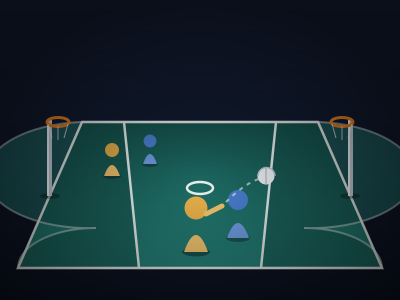
Take the pass, beat your marker, feed the circle.
 New
NewFirst Layer
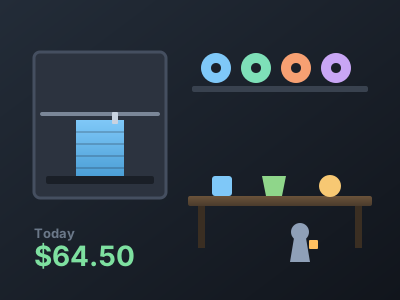
One printer, one spool, one table at the market.
 New
NewBurrow Guard
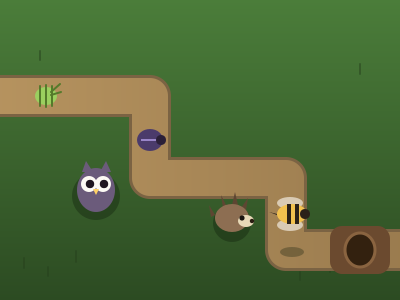
Cuddly animals. Nasty insects. Hold the line.
 New
NewDeep Mine
Dig. Upgrade. Dig deeper. Repeat forever.
 New
NewBolt Run
Run, jump, and do not touch the spikes.